There’s a paradox at the heart of financial domination that often confuses people looking at it from the outside: many of the most dedicated financial submissives are successful men. Men with high-powered careers. Men who earn six figures or more. Men who, in every other area of their lives, are decision-makers, leaders, executives.
These are men who could easily afford luxury purchases, expensive hobbies, or traditional dating dynamics where they take on the provider role. Instead, they’re sending money—sometimes substantial amounts—to dominants who give them nothing material in return except acknowledgment, control, and the experience of submission itself.
Why?
The easy answer is that it’s a fetish, a kink, something hardwired that doesn’t require explanation. And there’s truth to that—sexual and psychological desires don’t always follow logical patterns. But there’s also a deeper psychological architecture here worth exploring, because when you look closely at who’s drawn to financial submission and why, clear patterns emerge.
COMPANION STORY: “The Corner Office”
Experience this dynamic through fiction before diving into the psychology.
Read the story →This article explores why financial domination specifically appeals to successful, high-earning men, what psychological needs it satisfies that other forms of submission don’t, and what the financial component adds to the power exchange dynamic.
The Burden of Constant Decision-Making
Let’s start with the most obvious factor: successful men make decisions all day, every day.
If you’re a senior executive, a business owner, a lawyer, a doctor, a consultant—whatever high-achieving career path you’re on—your job is fundamentally about decisions. What strategy to pursue. Which hire to make. How to allocate resources. What to prioritize. What to cut.
These aren’t small decisions. They have consequences. People’s livelihoods depend on them. Your company’s future depends on them. Your own career trajectory depends on them.
And the higher you climb, the more consequential the decisions become, and the more people are waiting for you to make them. You walk into meetings and everyone looks at you. Not because they’re curious—because they need direction. They need you to decide so they can act.
This is exhausting in a way that’s hard to explain to people who don’t carry that responsibility.
It’s not the physical labor of work. It’s the constant cognitive load of being the person who has to have the answer. Who can’t say “I don’t know” without it rippling through the organization. Who can’t afford to be wrong too often. Who carries the weight of consequences that extend far beyond themselves.
You develop a persona to manage this. The decisive leader. The confident executive. The person who always knows what to do, or at least performs knowing what to do convincingly enough that everyone else believes it.
You perform this persona so consistently that it starts to feel like it’s just who you are.
And then you find financial domination.
The Relief of Not Deciding
Financial submission offers something that’s rare in the life of a successful man: the complete absence of decision-making authority.
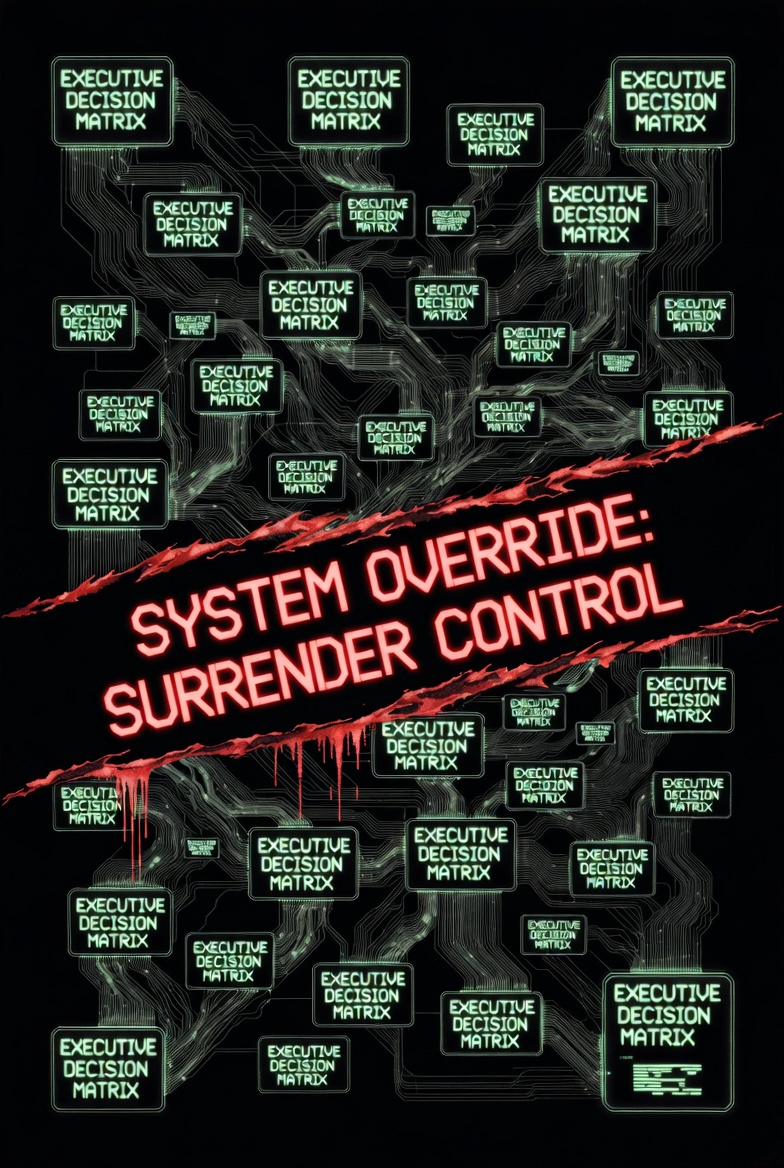
When you engage with a financial dominant, you’re not the one in control. You don’t decide when to tribute. You don’t decide how much. You don’t decide whether the interaction continues or ends. You don’t negotiate terms or set boundaries beyond the initial framework.
The dominant decides. You comply.
This is psychologically profound for someone who spends every other hour of their life being the decider.
It’s not that you’re incapable of making decisions—obviously you’re very capable, that’s why you’re successful. It’s that you’re tired of making them. You’re tired of the performance of certainty. You’re tired of being looked to for answers.
Financial submission lets you hand that burden to someone else. For an hour, or a session, or an evening, you’re not the executive. You’re not the leader. You’re not the person everyone is waiting on.
You’re just someone who does what he’s told.
And the relief of that—the sheer psychological relief of not being in charge—is part of what makes financial submission so compelling to men who are in charge everywhere else.
Money as Proof of Sincerity
Here’s where the financial component becomes essential rather than incidental.
For a successful, high-earning man, other forms of submission can feel performative. You can kneel. You can call someone “Sir” or “Master.” You can follow orders. But in the back of your mind, there’s often a voice asking: is this real? Am I actually submitting, or am I just playing at it?
Money removes that ambiguity.
When you send a tribute—especially a significant one, one that you actually notice leaving your account—there’s no room for doubt. You submitted. Materially. Concretely. In a way that has real consequences.
This matters more for high earners than it does for people with less financial security, because high earners are used to money being abstract. Numbers in an account. Automatic deposits. Payments that don’t require thought.
Financial submission makes money concrete again. Every tribute is a real thing you’re giving up. Not just numbers moving between accounts, but actual resources that represent your time, your labor, your choices. You could spend that money on something for yourself. You could save it. You could invest it.
Instead, you’re giving it to someone who demands it.
That concreteness is what makes the submission feel real. You’re not just saying you submit. You’re proving it in the most material way possible.
And for men who are used to their words carrying weight and authority, the need for that kind of proof runs deep. You don’t want to just claim you’re submitting. You want evidence. You want something you can point to and say: yes, this is real, I actually did this.
The tribute is the evidence.
The Inversion of Social Script
Successful men operate within a very specific social script.
You’re expected to be providers. Leaders. Decision-makers. The person who picks up the check, offers solutions, takes charge of situations. This is reinforced constantly—by professional culture, by social expectations, by dating dynamics, by the way people interact with you once they know what you do for a living.
You’re not asked what you need. You’re expected to already know what you need and to be capable of getting it yourself.
This script is fine when it aligns with what you actually want. But for many successful men, there’s a part of them that wants the script inverted. That wants to be the one receiving demands instead of making them. That wants someone else to take charge while they follow.
Financial domination inverts the script completely.
In a financial domination dynamic, you’re not the provider—you’re the resource. You’re not making decisions—you’re following orders. You’re not in control—someone else is, and you exist to serve their wants rather than managing your own.
This inversion is psychologically powerful because it’s so rare in your life. Most of your interactions reinforce the same role: you as leader, authority, provider. Financial submission gives you access to the opposite role in a structured, consensual way.

And because it’s structured around money rather than just words or physical acts, the inversion feels complete. You’re not just pretending to submit while maintaining ultimate control. You’re actually giving something valuable to someone else and letting them decide what happens to it.
That’s a genuine inversion of power. And for someone who holds power constantly in every other context, experiencing the opposite can feel like finally exhaling after holding your breath.
Control Through Loss of Control
Here’s a subtler point: engaging in financial submission actually gives successful men a form of control they don’t have elsewhere.
This sounds paradoxical. How does giving up control equal having control?
The answer is that in financial submission, you’re choosing the terms of your submission. You’re selecting a dominant. You’re establishing boundaries. You’re deciding when to engage and when to step back.
In your professional life, you don’t get to choose the terms of your responsibility. You can’t just decide “today I don’t feel like being in charge.” The role is constant, demanded by the structure of your position, and you don’t get to opt out without consequences.
But financial submission is something you choose to enter into. You can engage with it when you need it and step away when you don’t. You can find a dominant whose style matches what you’re looking for. You can establish hard limits that keep the dynamic within boundaries that work for you.
So while the experience of the dynamic itself is about giving up control, the broader practice of engaging in financial submission is actually an exercise of control—control over how and when you submit, to whom, and under what conditions.
The Luxury of Affordability
Let’s be practical for a moment: financial submission is accessible to successful, high-earning men in a way it isn’t to everyone.
If you earn $200,000 a year, a $500 tribute is noticeable but not devastating. If you earn $50,000 a year, that same $500 might be your grocery budget for a month.
This means that high earners can engage with financial submission at a level of intensity that would be irresponsible or impossible for people with less financial security. They can send amounts that feel genuinely significant—amounts that register as sacrifice—without putting themselves in actual financial jeopardy.
That sweet spot—where the tribute feels like a real cost but doesn’t create genuine hardship—is easier to hit when you have more disposable income.
This isn’t to say financial submission is only for the wealthy. People at all income levels engage with it, adjusting the amounts to what’s sustainable for their situation. But the psychological experience of sending a tribute that feels both significant and safe is more accessible to people who have financial cushion.
Status and the Appeal of Leveling
Successful men occupy positions of status. Senior titles. Respected roles. Social capital that comes from achievement.
Status is useful. It opens doors. It provides influence. But it also creates distance. People treat you differently when they know what you do. They’re more careful. More deferential. Less likely to challenge you or be genuinely honest with you.
Over time, that distance can feel isolating. You’re respected, but are you actually known? Do people see you, or do they just see your position?
Financial domination offers a form of interaction where your status is irrelevant—or, more accurately, where your status becomes something to be ignored or actively undermined.
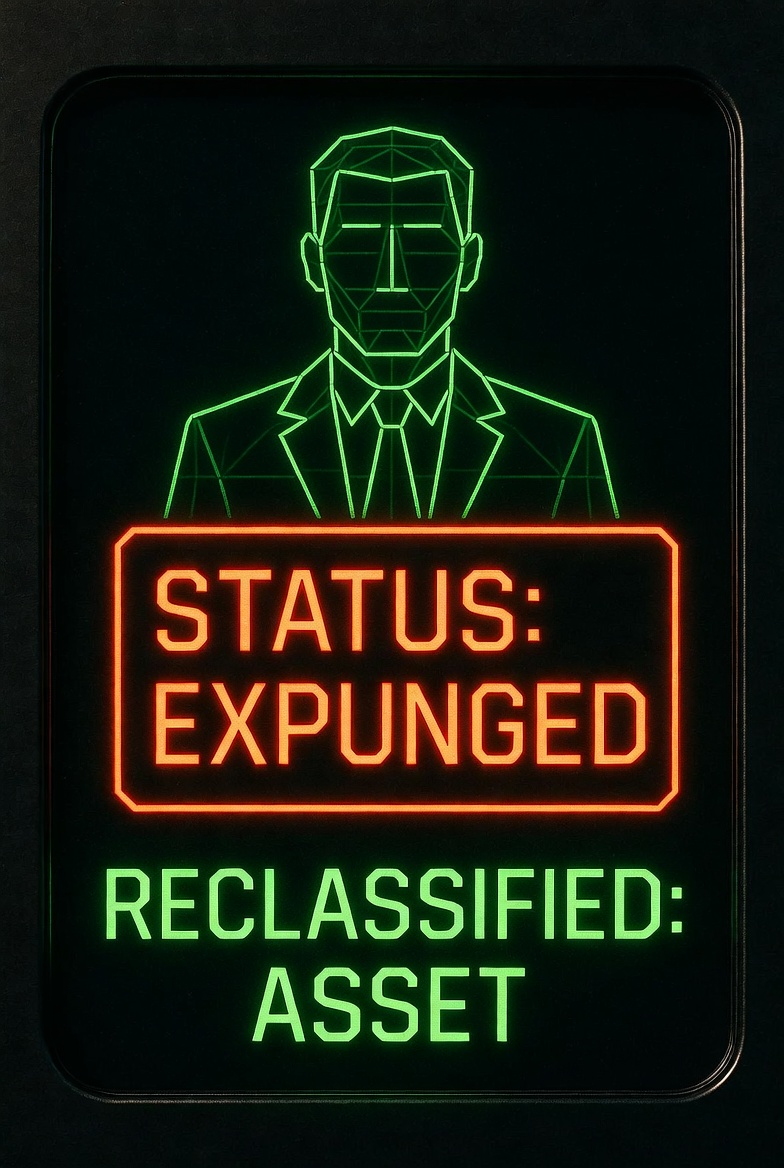
A good financial dominant doesn’t care what you do for a living (beyond confirming you can afford to tribute). They don’t care about your title or your accomplishments. You’re not special to them because of your career. You’re useful to them because you have resources they want.
That’s leveling in the truest sense. Your achievements don’t earn you deference in the dynamic. Your status doesn’t protect you from demands. You’re stripped down to the one thing that matters in the context: your ability to send.
For men who spend their lives being treated as special because of what they’ve achieved, this leveling can be deeply refreshing. It’s a space where you’re not performing success. You’re not managing how people perceive you. You’re just—there. Present. Being treated as a resource rather than as a person of importance.
It sounds harsh when you describe it that way. But for someone who’s tired of status and the performance it requires, harsh can feel like honesty. And honesty, even when it’s uncomfortable, can feel like intimacy in a way that deference never does.
Risk and the Illusion of Safety
Successful men are often risk-averse in their personal lives, even when they take calculated risks professionally.
Your career depends on maintaining stability. Your reputation depends on not making mistakes that become public. Your family (if you have one) depends on your financial security.
This creates a life where you can’t afford too much genuine risk. You play things safe. You’re careful. You manage downside.
Financial submission offers a way to experience risk in a controlled environment.
Yes, you’re giving away money. Yes, there’s a loss of control. Yes, it can feel genuinely scary to send amounts that push your comfort zone.
But the risks are contained. You’re not risking your career. You’re not risking your reputation (assuming anonymity is maintained). You’re not risking your relationships in the way you would if you pursued other forms of transgressive behavior.
You’re risking money, which—if you’re financially successful—is the one resource you can afford to risk.
The Need to Be Pushed
Here’s something people don’t talk about enough: successful men often lack anyone in their lives who can genuinely push them.
In professional contexts, you’re the one pushing. You’re setting targets, raising standards, demanding more from your team. No one is pushing you—at least not in a way that feels real. Your boss (if you have one) might set high-level goals, but day-to-day, you’re self-directed.
In personal contexts, people are often careful with you. Your partner might challenge you sometimes, but there’s also an awareness of the stress you’re under. Your friends are peers, not authorities. No one is really in a position to demand things from you.
Over time, the absence of being pushed can start to feel like a lack. You’re pushing yourself constantly, sure, but that’s not the same as someone else pushing you. Self-directed pressure doesn’t scratch the same psychological itch as external demands.
Financial domination provides external demands that feel genuinely authoritative.
A good dom doesn’t ask if you can afford the tribute. They tell you to send it. They don’t negotiate based on what you want to give. They set the terms and you meet them or you don’t.
That external pressure—the experience of someone making demands that you have to rise to meet—can be surprisingly satisfying for men who never experience that anywhere else. It creates accountability outside yourself. A voice that isn’t yours telling you what’s expected.
Anonymity and Authenticity
Many successful men engage with financial domination anonymously or semi-anonymously. They use pseudonyms. They keep the dynamic separate from their public life. Their dominant doesn’t know their real name, where they work, or what they look like.
This anonymity serves a practical function—protecting reputation, maintaining professional boundaries. But it also serves a psychological function that’s deeper than just risk management.
Anonymity allows authenticity.
When your dominant doesn’t know who you are professionally, you’re not performing success. You’re not managing their perception of you. You’re not worried about whether your submission reflects poorly on your capability as a leader.
You can just be someone who needs to submit. Someone who wants to give. Someone who finds relief in being controlled.
It’s Not About the Money (Except It Is)
Here’s the final piece: for successful, high-earning men, financial submission is paradoxically both about the money and not about the money.
It’s not about the money in the sense that the appeal isn’t transactional. You’re not paying for a service in the traditional sense. You’re not getting entertainment value equivalent to the cost. The money itself isn’t the point—the submission is.
But it’s absolutely about the money in the sense that money is what makes the submission real.
If you’re someone for whom money comes relatively easily, giving it away is one of the few acts of sacrifice that actually costs you something. Time is finite, sure, but you’re used to spending your time on work. Physical acts of submission might be meaningful, but they’re temporary and don’t have lasting material consequence.
Money is different. When you send a tribute, it’s gone. That amount is no longer available for anything else. You’ve made a permanent trade: your resources for someone else’s satisfaction.
That permanence is what makes it powerful.
Understanding Your Own Draw
If you’re a successful, high-earning man who finds yourself drawn to financial submission, the reasons probably aren’t simple. They’re layered. Multiple factors operating simultaneously, creating a pull you might not fully understand but definitely feel.
Maybe it’s the relief of not deciding. Maybe it’s the need to prove your submission is real. Maybe it’s the inversion of the role you perform everywhere else. Maybe it’s all of these, plus factors unique to your own psychology that don’t fit neatly into categories.
What matters is recognizing that the draw isn’t random. It makes sense given who you are and what your life demands of you. Financial submission offers something your success doesn’t provide: the experience of giving rather than taking, following rather than leading, being pushed rather than pushing others.
It’s not weakness. It’s not failure. It’s not evidence that you’re secretly incapable of the authority you hold professionally.
It’s counterbalance.
It’s the psychological opposite of what you do all day, offered in a form that feels genuine because it costs you something real.
And for men whose lives are built on achievement, control, and constant decision-making, that opposite isn’t just appealing.
Sometimes it’s necessary.
Final Thoughts
Financial submission appeals to successful, high-earning men because it offers what success often doesn’t: the experience of surrender, the relief of not being in charge, the proof that comes from material sacrifice, and the inversion of a role they perform constantly.
The financial component isn’t incidental. It’s central. Money is the language that makes the power exchange feel real rather than theoretical. And for men who have money, giving it away is one of the few acts of submission that genuinely costs them something.
This doesn’t mean all financial subs are high earners, or that all high earners are drawn to financial submission. But there’s a reason the overlap exists. The psychological needs that financial domination addresses—the need for relief from authority, for proof of submission, for inversion of power, for being pushed by someone external—are often most acute in men whose professional lives demand constant leadership.
If you’re one of those men, understanding why the dynamic appeals to you isn’t about justifying it or explaining it away. It’s about recognizing what you’re actually seeking and making sure the way you engage with financial submission serves that need sustainably.
Because the goal isn’t just to submit financially.
It’s to find the psychological relief, authenticity, and balance that financial submission—done well—can provide.