In financial domination, there’s a subset of submissives who don’t want conversation, connection, or even acknowledgment of their humanity. They want to be treated as exactly what they are in that moment: a machine that dispenses cash.
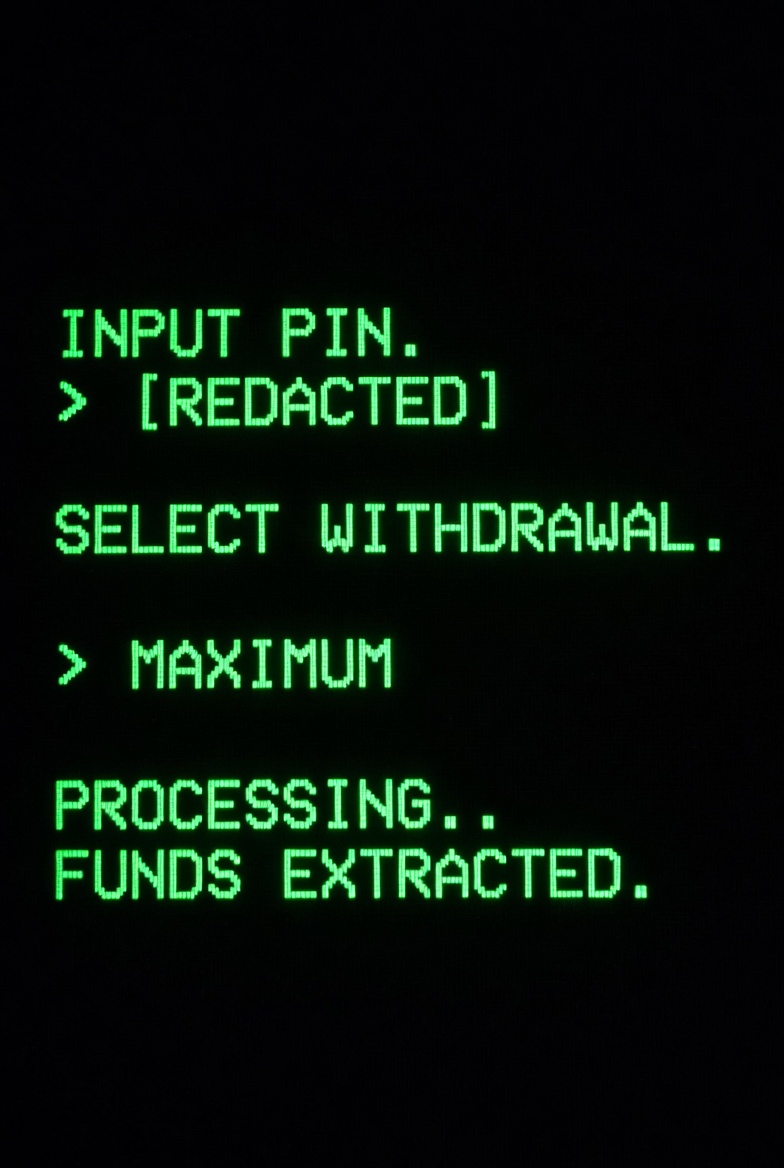
The interaction is scripted, mechanical, transactional:
- “Please enter PIN.”
- “Select withdrawal amount.”
- “Transaction processing…”
- “Cash dispensed. Thank you for using this ATM.”
No “good boy.” No conversation. No recognition that a person just sent money. Just the cold, functional language of a banking machine completing a transaction.
For people outside financial domination, this can seem like the strangest possible variation. Why would someone want to be treated as a literal object—not even degraded as a person, but addressed as a machine?
COMPANION STORY: “USER_7793”
Experience this dynamic through fiction before diving into the psychology.
Read the story →This article explores the psychology of the human ATM dynamic, what makes complete objectification appealing, why some submissives seek the removal of all human interaction, and how this represents a specific form of submission that’s distinct from other financial domination dynamics.
What the Human ATM Dynamic Looks Like
Before exploring the psychology, let’s be clear about what this actually is.
In a typical human ATM interaction:
- The submissive initiates contact (or responds to the dominant’s post looking for “ATM service”).
- The dominant responds with ATM-style language:
- “Please enter your 4-digit PIN.”
- “Welcome. Select transaction type: [1] Withdrawal [2] Balance inquiry”
- “Select amount: [1] $50 [2] $100 [3] $200 [4] Other”
- The submissive plays along:
- Provides a “PIN” (often just a random number, but the performance matters)
- Selects an option by typing the number
- Confirms the transaction
- The transaction completes:
- “Processing…”
- “Transaction approved.”
- “Cash dispensed: $100”
- “Would you like another transaction? [Y/N]”
- “Thank you for using this ATM. Have a nice day.”
No personal interaction. No acknowledgment of the submissive as a person. No “you’re such a good boy” or “I love taking your money.” Just cold, mechanical, functional language.
The submissive sent money and was treated exactly like a banking machine would be treated: as a tool that performed its function and nothing more.
The Appeal of Complete Objectification
The human ATM dynamic represents the most complete form of objectification available in financial domination.
You’re not being treated as a submissive person. You’re not being treated as a “good boy” or a “pathetic paypig” or any other identity that still acknowledges your personhood, even in degraded form. You’re being treated as a thing. An object. A machine that dispenses money and has no other qualities, needs, or existence beyond that function.
Why this appeals to certain submissives:
- It removes all performance of relationship. In most financial domination, there’s at least some performance of relationship. The human ATM dynamic removes all of that. There’s no relationship. You’re not even significant enough to be mocked. You’re just functional.
- It makes the submission feel total. When you’re treated as a machine, your humanity is completely erased within the interaction. The objectification is absolute.
- It satisfies the desire to be purely functional. Some submissives don’t want complexity. They don’t want to be interesting or valued for anything beyond their ability to provide money.
- It creates emotional distance. For people who struggle with intimacy or who find human interaction exhausting, the mechanical nature of the ATM dynamic provides submission without the weight of actual human engagement.
- It’s clarifying. There’s no ambiguity about what you are in this dynamic. You’re an ATM. ATMs aren’t liked or valued. They’re used.
The Psychology of Dehumanization in Kink
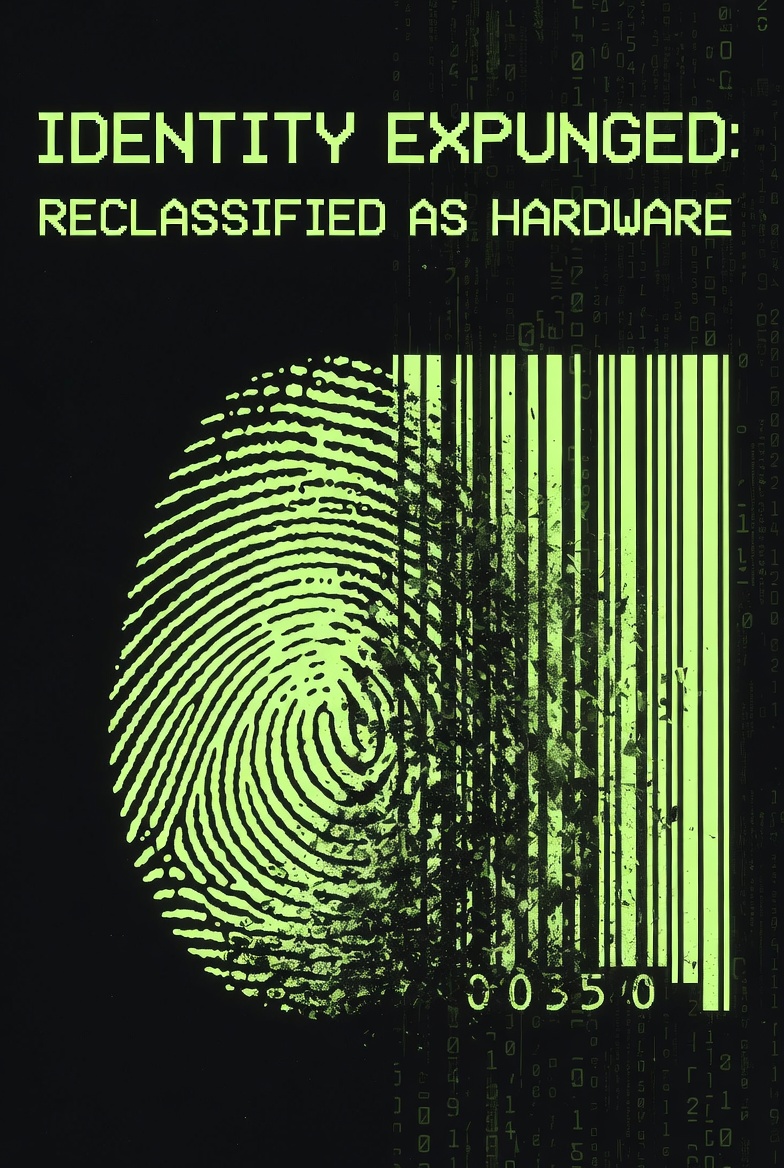
The human ATM dynamic is an extreme form of consensual dehumanization—the intentional removal of human qualities within a bounded, consensual context.
Dehumanization in abuse is harmful because it’s non-consensual and used to justify cruelty. Dehumanization in kink can be psychologically satisfying precisely because it’s chosen and boundaried.
What dehumanization provides psychologically:
- Relief from the burden of personhood. Being a person is complicated. Being temporarily treated as an object removes all that complexity. You don’t have needs that matter. You’re just a function.
Freedom from judgment. Machines aren’t judged. They work or they don’t, but there’s no moral dimension. There’s no good or bad, no success or failure beyond whether the transaction completes.
Simplification of identity. In the human ATM dynamic, your identity is singular: you’re a cash dispensing machine. That simplification can feel like relief from the complexity of maintaining a multifaceted self.
Control through surrender of control. By accepting complete objectification, you gain a form of control. You know exactly what’s expected. There’s no risk of disappointing because machines can’t disappoint.
Why Mechanical Language Matters
The specific language of the ATM dynamic—“Please enter PIN,” “Select withdrawal amount,” “Transaction complete”—is essential to the experience.
It’s not just that the dominant is treating you as an object. It’s that they’re treating you as a specific kind of object, with a specific interface, using the exact language you’d encounter with a real ATM.
The language creates psychological distance through familiarity: You’ve interacted with real ATMs hundreds of times. The interface is familiar. When a dominant uses that exact language with you, they’re activating all your associations with real ATMs—impersonal, functional, purely transactional.
The script removes improvisation: In most human interactions, there’s improvisation. The ATM script removes that. The interaction is predetermined. There’s no room for deviation, no space for personality to enter. That rigidity is the point. Machines follow scripts.
The lack of acknowledgment is the message: “Transaction complete. Thank you for using this ATM” acknowledges nothing about you as a person. It’s completely impersonal. That impersonality—the complete absence of anything specific to you—is the core of the objectification.
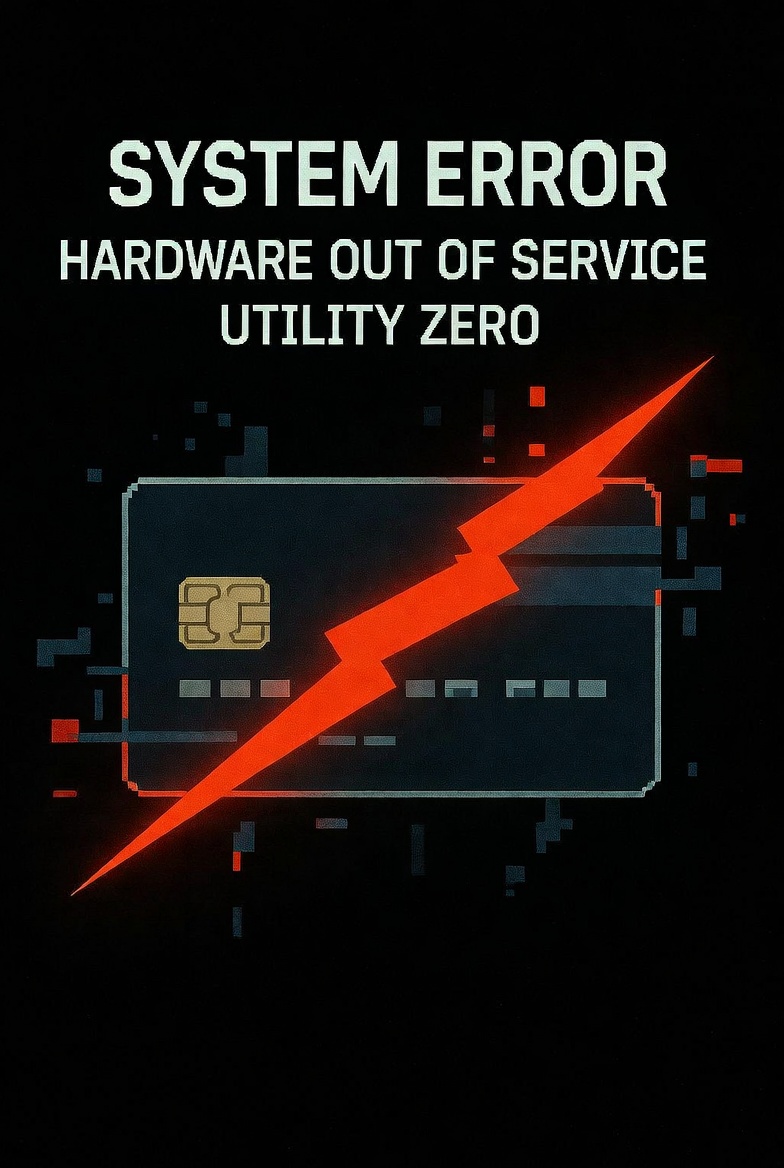
The “ATM Out of Service” Variation
Some human ATM dynamics include an additional element: being told you’re “out of service” when you can’t tribute or when your tribute is insufficient.
- “Transaction declined. Insufficient funds.”
- “This ATM is temporarily out of service.”
- “Error. This machine cannot process your request at this time.”
The submissive is treated not just as a machine, but as a broken machine. Useless. Not even functional.
The psychology here is layered:
When you can’t tribute, being told you’re “out of service” frames your inability as mechanical failure rather than human limitation.
This can be:
- Relieving: Your financial limitations aren’t a personal failing. The machine is just out of cash. There’s no moral dimension.
- Devastating: Your only value was function, and now you can’t even perform that function. You’re not just objectified—you’re broken, useless.
Understanding which way it hits you is important before engaging with this variation.
Human ATM as Protection from Intimacy
For some submissives, the human ATM dynamic is specifically appealing because it avoids intimacy.
They want to engage in financial domination, but they don’t want emotional connection, they find human interaction draining, or they want submission without the weight of being known. The ATM dynamic provides exactly this. You can submit financially without any emotional exposure.
- Healthy: If you’re someone who’s introverted or simply prefers transactional interactions, the ATM dynamic gives you access to financial submission without requiring forms of engagement that don’t work for you.
- Unhealthy: If you’re using the ATM dynamic to avoid intimacy because intimacy feels dangerous or because you’re convinced you’re not worthy of human connection, the dynamic might be reinforcing patterns that harm you.
The Dominant’s Experience
It’s worth considering what the human ATM dynamic provides for dominants, because understanding their psychology helps you recognize who’s actually engaging with the dynamic vs. who’s just going through motions.
For dominants who genuinely engage with the ATM dynamic:
- It’s efficient. No need for conversation or emotional labor.
- It’s emotionally low-effort. Just follow the script.
- It emphasizes the transactional nature. There’s no pretense of relationship.
- It can be psychologically satisfying. Treating someone as a literal object is a form of power.
For dominants who are just lazy: Some dominants use the “ATM” framing as an excuse to do minimal work. They’re not actually engaging with the psychology of objectification. A dominant genuinely engaging with the dynamic will be consistent with the script. A lazy dominant will be inconsistent, sometimes breaking character or ignoring the mechanical language entirely.
The Limits of Objectification
The human ATM dynamic exists within boundaries, and understanding those boundaries is essential.
You’re performing objectification, not living it: Even in the most committed ATM dynamic, you’re not actually a machine. You’re a person choosing to be treated as one for a specific purpose within a specific interaction. The performance ends.
The dominant knows you’re a person: Even while treating you as an ATM, the dominant knows you’re human. If a dominant seems to genuinely believe you’re nothing more than a cash source outside of the scene, that’s a red flag.
You need the ability to stop the performance: At any point, you should be able to say “I need to break character” and have the dominant respond to you as a person.
When the ATM Dynamic Works Well
The human ATM dynamic works well when:
- Both parties understand it’s consensual objectification, not genuine dehumanization.
- The submissive genuinely wants functional treatment.
- The dominant is consistent and maintains the mechanical language.
- There are clear boundaries and ways to exit the dynamic if needed.
- The submissive can integrate the experience afterward.
When the ATM Dynamic Becomes Harmful
The dynamic crosses into harm when:
- The submissive begins to genuinely believe they are nothing more than a cash source.
- The dominant refuses to acknowledge the submissive’s humanity in any context, even during meta-conversations about boundaries.
- The submissive wants to exit the role but feels trapped.
- Financial harm occurs because the mechanical nature of the transaction makes the money feel less real.
Variations on the ATM Theme
The human ATM dynamic has variations that modify the basic structure:
- The “premium ATM”: You dispense larger amounts. “Premium account detected. Access to higher limits granted.” Adds a hierarchy.
- The “broken ATM”: Persistent “out of service” messaging. Objectified as a non-functional object.
- The “shared ATM”: Multiple dominants using the same “ATM.” You’re being treated as a public resource.
- The “ATM maintenance”: Periodic tributes required for the “maintenance” of being operational.
- The “ATM with fees”: Every transaction includes an arbitrary fee. You’re being charged for the privilege of being used.
The ATM Dynamic and Identity
For submissives who engage heavily with the human ATM dynamic, it can become part of their identity. They’re “an ATM.”
This can be empowering: If “being an ATM” gives you a clear sense of purpose and structure, the identity can be psychologically useful. This can be limiting: If you can’t imagine being treated any other way, the identity has become a cage. You’ve reduced yourself to a single function.
The healthiest approach is: “I engage with the ATM dynamic because it serves specific needs, but I’m a person who does this, not a machine that exists to do this.”
For Dominants: How to Engage with ATM Subs Ethically
If you’re a dominant considering engaging with submissives who want the human ATM dynamic:
- Understand you are providing a specific form of objectification that serves the submissive’s psychological needs.
- Be consistent. Commit to the script.
- Have meta-conversations outside the dynamic to discuss boundaries.
- Don’t let the script prevent you from noticing genuine harm or distress.
- Respect the performance without believing it.
Final Thoughts
The human ATM dynamic represents one of the purest forms of objectification in financial domination. You’re not a degraded person. You’re a machine that dispenses cash.
For some people, this complete removal of personhood is exactly what makes financial submission satisfying. No complexity. No emotional weight. Just pure function. The mechanical language reinforces that you’re being treated as a specific, familiar object.
This dynamic works when it’s consensual, boundaried, and serving real psychological needs for functional clarity and transactional interaction. It becomes harmful when the objectification stops being performance and starts being belief.
If you’re drawn to the human ATM dynamic, understand what you’re seeking: absolute functional objectification. And if that genuinely serves your psychology, then the ATM dynamic is a valid, meaningful form of financial submission.
Just remember: even ATMs can be taken out of service for maintenance. And you—unlike a real ATM—have the right to say when that needs to happen.