In the world of financial domination, language matters. The terms we use to describe what’s happening shape how we understand the dynamic, what we expect from it, and whether it’s ultimately sustainable or destructive.
Two terms that often get confused—or deliberately conflated—are “rinsing” and “ongoing financial submission.” On the surface, they might look similar: money moving from submissive to dominant. But the psychology behind them, the structure of the interaction, and the long-term outcomes are fundamentally different.
COMPANION STORY: “Then and Now”
Experience this dynamic through fiction before diving into the psychology.
Read the story →This article explores what distinguishes rinsing from ongoing dynamics, why the difference matters, and how to recognize which one you’re actually involved in—because understanding that distinction can be the difference between a practice that serves you and one that harms you.
Defining Terms
Let’s start with clear definitions, because these terms mean different things to different people.
Rinsing refers to a one-time or short-term extraction of maximum resources from a submissive, typically without any intention of continuing the dynamic afterward. The goal is to get as much as possible, as quickly as possible, and then move on. The submissive is treated as a resource to be depleted rather than a person to have an ongoing relationship with—even a transactional one.
Ongoing dynamics refer to sustained financial submission relationships where both parties have some investment in continuity. There are regular tributes, established patterns, communication that extends beyond just demands and payments. The dominant wants the submissive to continue, which means there’s at least some consideration for sustainability.
The core difference isn’t about amounts of money—you can send large amounts in both contexts. The difference is about intent, structure, and what happens after the money is sent.
The Psychology of Rinsing
Rinsing operates on extraction logic.
The dominant’s goal is to identify submissives who are vulnerable—whether financially, emotionally, or psychologically—and extract maximum value before the submissive either runs out of resources or realizes what’s happening and disengages.
This isn’t about building a relationship. It’s not about understanding what the submissive needs or creating an experience that satisfies them. It’s pure extraction: take what you can get, and when there’s nothing left to take, move on to the next target.
The psychology from the dominant’s side is predatory in a way that goes beyond the consensual power exchange of financial domination. They’re not interested in you as a person or even as a consistent income source. You’re a mark. A one-time opportunity. Someone to exploit and discard.
From the submissive’s side, rinsing often happens when someone is in a vulnerable state:
- New to the dynamic. You’ve just discovered financial domination. You don’t know what’s normal, what’s reasonable, what to expect. A dominant who rinses will exploit that inexperience.
- Emotionally compromised. You’re going through something—a breakup, a loss, a period of intense stress or loneliness. Your judgment is impaired.
- In a heightened arousal state. You’re edging, you’re deep in a fantasy, your decision-making is neurochemically altered. A rinse-focused dominant will push hard in those moments.
The psychological experience of being rinsed often includes:
- Escalation that feels overwhelming. The demands come fast. There’s pressure. You’re told to send more, and more, and more, without space to process.
- Absence of reciprocity. You’re giving and giving, but you’re not receiving the attention, acknowledgment, or psychological satisfaction that should come with financial submission.
- Sudden disappearance. Once you’ve hit your limit, the dominant ghosts. No warning. No explanation. They’re just gone.
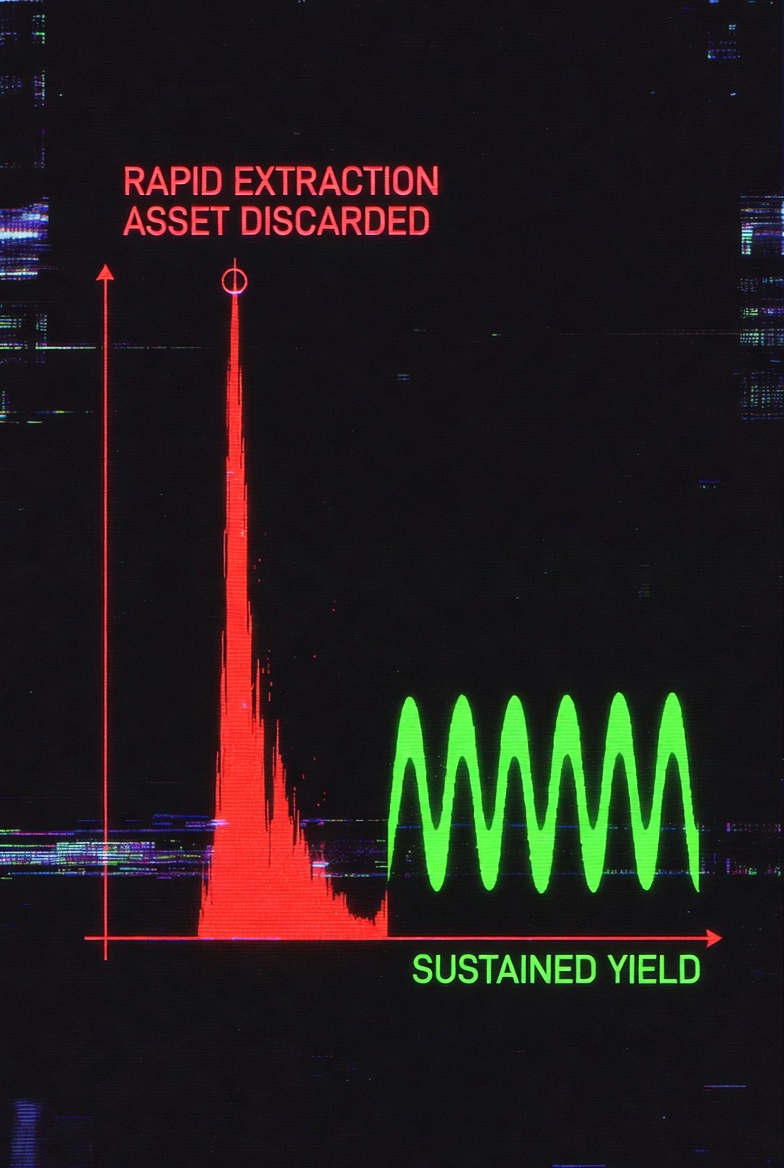
The aftermath of rinsing often includes intense regret, shame, and a feeling of having been used rather than having engaged in consensual power exchange. Because you were used. That’s what rinsing is.
The Psychology of Ongoing Dynamics
Ongoing dynamics operate on relationship logic, even if the relationship is primarily transactional.
The dominant’s goal is to establish a sustainable arrangement where the submissive continues to tribute over time. This requires at least some consideration for the submissive’s financial capacity, emotional needs, and long-term engagement.
It’s not altruism—the dominant is still receiving financial benefit, still in a position of power, still making demands. But there’s recognition that sustainability requires not extracting everything at once. It requires leaving the submissive with enough resources and enough psychological satisfaction to continue.
From the dominant’s side, ongoing dynamics involve:
- Understanding the submissive’s capacity. How much can they realistically send? What’s sustainable for them long-term?
- Providing something in return. Attention. Acknowledgment. Structure. Psychological engagement. The dominant provides the experience of being dominated—which includes actually being present.
- Building patterns. Regular tribute schedules. Established forms of communication. Expectations that are clear rather than chaotic.
From the submissive’s side, ongoing dynamics provide:
- Predictability. You know what’s expected. You know when tributes are due. You can budget. You can integrate financial submission into your life.
- Continuity. The dominant is still there tomorrow. And next week. And next month.
- Psychological satisfaction. You’re not just giving money into a void. You’re participating in a dynamic that has rhythm, meaning, and sustained submission.
The psychological experience of an ongoing dynamic is fundamentally different from rinsing. There’s less chaos. Less panic. Less feeling of being drained and discarded. Instead, there’s structure, presence, and a sense that your submission is valued rather than just your wallet.
Intent Makes the Difference
The distinction between rinsing and ongoing dynamics often comes down to intent.
A dominant who’s building an ongoing dynamic wants you around. They might push you, they might demand significant amounts, but they’re calibrating to what you can sustain because they want you to keep coming back.
A dominant who’s rinsing doesn’t care whether you come back. They want maximum extraction now, and if you disappear afterward—financially depleted, emotionally wrecked—that’s not their concern.
This is why intent matters more than amounts. You could send $1,000 in an ongoing dynamic and have it be a sustainable, satisfying part of your practice. You could send $200 as part of a rinse and have it be exploitative and harmful. The money itself doesn’t tell you which is happening. The context around the money does.
Ask yourself:
- Does this person want to talk to you, or just extract from you?
- Is there communication outside of demands for money?
- Do they know anything about you—your limits, your situation, your needs?
- Are they calibrating to what you can sustain, or just pushing for maximum in the moment?
- Do they disappear when you can’t send, or do they remain present?
The Aftermath
The aftermath of rinsing and the aftermath of participating in an ongoing dynamic look very different.
After a rinse session, you often feel:
- Regret. Deep, visceral regret. The sense that you made terrible decisions and someone took advantage of you.
- Shame. You feel foolish. Used. Like you should have known better.
- Financial stress. You sent amounts you couldn’t actually afford. Now you’re dealing with real consequences.
- Abandonment. The person who pushed you to send all that money is gone.
After participating in an ongoing dynamic you typically feel:
- Satisfaction. You submitted. It cost you something. That’s the point.
- Continuity. The dynamic continues. Your dominant is still there.
- Integration. The tribute fits into your financial life. It’s noticeable but not devastating.
- Connection. You’re in something with someone, however transactional.
The difference in these aftermaths is everything. One leaves you wrecked. The other leaves you engaged.

The “Findom is supposed to hurt” Myth
There’s a dangerous narrative in some corners of financial domination culture that goes like this: “Real findom is supposed to hurt. If you’re not financially suffering, it’s not real submission. If you can afford it, it doesn’t count.”
This narrative serves rinsers extremely well. It tells submissives that the pain, the regret, the financial instability—that’s all proof that they’re doing it right.
This is manipulation dressed up as authenticity.
Yes, financial submission should cost you something. That’s the nature of submission—it requires sacrifice. But there’s a difference between sacrifice and self-destruction. Between submission that challenges you and submission that harms you.
A sustainable financial submission practice involves sending amounts that feel significant without creating genuine financial hardship, and experiencing the psychological intensity of giving while maintaining enough stability to continue.
Financial domination doesn’t require your destruction. It requires your submission. And submission—genuine, sustained, meaningful submission—is only possible if you have something left to submit with.
Red Flags for Rinsing
If you’re trying to figure out whether you’re in an ongoing dynamic or being rinsed, here are clear red flags:
- Immediate escalation. You’ve just started talking and they’re already pushing for large amounts.
- No communication outside of demands. You’re a wallet, not a person.
- Resistance to boundaries. You try to establish limits and they push back aggressively.
- Pressure during vulnerability. They push hardest when you’re aroused, emotional, or otherwise compromised.
- Disappearance after extraction. They got a large amount from you and then they’re gone.
- Explicit “rinse” language. Some dominants are open about being rinsers. If someone tells you they’re going to rinse you, believe them.
These red flags don’t mean the person is necessarily doing something criminal or illegal. But they do mean you’re being treated as a resource to extract from rather than a person to have an ongoing dynamic with.
When Rinsing Is Consensual
Here’s where it gets complicated: sometimes people consensually seek out rinsing. They want the experience of being completely drained. They find the idea of being used and discarded psychologically compelling.
If that’s genuinely what you want, then rinsing can be a consensual choice. But it requires three things:
- Full awareness. You understand that this is what’s happening.
- Financial capacity. You can actually afford to be rinsed without it creating genuine hardship.
- Emotional preparedness. You understand that the aftermath will include the dominant disappearing.
But most people who get rinsed don’t have all three. They think they’re entering an ongoing dynamic. They send more than they can afford. They’re not prepared for the abandonment that follows. That’s when rinsing stops being a kink and starts being exploitation.
Building an Ongoing Dynamic
If what you want is sustainable financial submission, you need to approach it differently than you’d approach a rinse.
- Start slowly. Small tributes first. Build over time. Establish trust.
- Communicate. Tell your dominant what you can sustain. Good dominants want this information because it helps them build something that lasts.
- Establish structure. Regular tribute schedules. Clear expectations.
- Pay attention to reciprocity. Are you getting attention, engagement, the experience of being dominated? If you’re giving and receiving nothing, that’s extraction, not exchange.
- Check in with yourself. Is this sustainable? Am I getting what I need?
Building an ongoing dynamic takes time. But the payoff—a sustainable practice where you can explore financial submission deeply, over time, with someone who knows you and engages with you—is worth the effort.
The Economic Logic
There’s an interesting economic angle here that’s worth noting. From a purely rational perspective, ongoing dynamics make more sense for dominants than rinsing does.
A submissive who sends $200/month for two years generates $4,800 total. A submissive who gets rinsed for $1,000 once generates $1,000 total. The math clearly favors ongoing dynamics.

But rinsing still happens for a few reasons: immediate gratification, lack of effort, volume strategy, or lack of skill. Building ongoing dynamics requires actual dominance skill—understanding psychology, reading people, calibrating to their needs. Rinsing just requires aggression and access to vulnerable people.
For submissives, understanding this economic logic is useful. If they’re pushing for everything now, they’re probably operating on rinse logic. If they’re calibrating to what you can sustain, they’re probably thinking long-term.
Recognizing Your Own Patterns
If you’ve been involved in financial domination for a while, you probably have patterns. Maybe you keep finding dominants who drain you and disappear. Or maybe you’ve managed to build ongoing dynamics.
Understanding your own patterns is essential to figuring out what you’re actually seeking and whether you’re getting it. If you keep getting rinsed when what you actually want is an ongoing dynamic, something in your selection process or your boundaries needs to change.
There’s no right answer. But there is self-knowledge. And self-knowledge is what lets you make conscious choices rather than just responding to whoever pushes your buttons most effectively.
Final Thoughts
Rinsing and ongoing dynamics are not the same thing. They involve different psychology, different intent, different structures, and different outcomes.
Rinsing is extraction. Maximum resources, minimum engagement, no concern for sustainability or the submissive’s wellbeing.
Ongoing dynamics are relationships—however transactional, however unequal—where both parties have some investment in continuity.
If you want sustainable financial submission—the kind that enhances your life rather than destroying it—then you need ongoing dynamics, not rinsing. If you want the intensity of complete extraction, if you’re prepared for it and can afford it, then rinsing might serve that specific desire.
But you need to know which one you’re in. You need to be able to recognize the difference. And you need to make sure that what’s happening aligns with what you actually want and can sustain.
Because financial domination, at its best, is a practice—something you do over time, something that becomes part of your life, something that serves real psychological needs.
Rinsing isn’t a practice. It’s an event. One extraction, and then it’s over.
Both exist. Both are real parts of the financial domination landscape. But only one of them is sustainable. And sustainability—for most people—is what makes financial submission meaningful rather than just destructive.