If you’re involved in financial domination, you’ve encountered both terms: tributes and drain sessions. On the surface, they might seem like the same thing—money changing hands from submissive to dominant. But anyone who’s experienced both knows they feel fundamentally different. The psychology behind them is different. The purpose is different. And understanding that difference is essential to building a sustainable financial submission practice that actually serves what you need.
COMPANION STORY: “Two Kinds of Thursdays”
Experience this dynamic through fiction before diving into the psychology.
Read the story →This article explores what distinguishes drain sessions from regular tributes, why each appeals to different psychological needs, and how to think about incorporating both (or choosing between them) in your dynamic.
Defining Terms
Let’s start with clear definitions, because the language around financial domination isn’t always consistent.
Regular tributes are recurring, predictable payments made as part of an ongoing dynamic. They might be weekly, bi-weekly, or monthly. They’re often a set amount, or within a predetermined range. The submissive knows they’re coming. The dominant expects them. They’re the steady baseline of the financial relationship—the equivalent of rent, if you will. Consistent. Sustainable. Part of the rhythm of the dynamic.
Drain sessions are intensive, time-bound events where the submissive sends significantly more than usual, often in rapid succession, sometimes until a predetermined limit is reached (or, in more extreme cases, until the submissive genuinely can’t send more). These aren’t predictable. They’re occasional. They’re meant to feel exceptional—intense, overwhelming, a departure from the normal pattern.
The key difference isn’t just the amount of money. It’s the psychological experience and the purpose each serves within the dynamic.
The Psychology of Regular Tributes
Regular tributes are about constancy and presence.
When you send a weekly or monthly tribute, you’re not doing it because you’re overwhelmed with arousal or caught in a moment of intense need. You’re doing it because it’s Thursday, or because it’s the first of the month, or because that’s what you’ve agreed to as part of the structure of your submission.
This matters psychologically because it separates financial submission from the volatility of emotional or sexual states. You tribute regardless of how you feel. Regardless of whether you’re aroused. Regardless of whether you had a good day or a terrible one. The tribute happens because the dynamic exists, not because of any particular mood or circumstance.
This is powerful for several reasons:
- It builds discipline. Regular tributes train you to prioritize the dynamic even when it’s not convenient or exciting. When the novelty has worn off. When you’re tired. When you’d rather spend the money on something else. The tribute still happens. That consistency builds a form of psychological endurance that impulsive, mood-dependent submission doesn’t develop.
- It creates ongoing presence. A weekly tribute means your dominant is present in your financial life every single week. Not occasionally. Not when you happen to feel like it. Every week. That regularity embeds the dynamic into the actual structure of your life rather than keeping it as an occasional indulgence.
- It’s sustainable. Because regular tributes are predictable, you can budget for them. You can build them into your financial planning the same way you’d account for any other recurring expense. This makes them viable long-term in a way that unpredictable, intensity-driven spending often isn’t.
- It demonstrates commitment. Anyone can send a large amount once in a heightened emotional state. Sending a smaller amount every single week for months or years? That’s a different kind of devotion. It says: this isn’t a phase. This isn’t impulse. This is who I am and what I do.
The psychological experience of regular tributes is less about intensity and more about integration. You’re weaving financial submission into the fabric of your regular life. It becomes normal. Expected. A part of how you operate.
For some submissives, that normalization is exactly what they’re looking for. The financial submission stops being this wild, separate thing and becomes simply part of their identity and routine.
The Psychology of Drain Sessions
Drain sessions are about loss of control and catharsis.
Where regular tributes are steady and predictable, drain sessions are designed to feel overwhelming. You’re not sending a predetermined amount and moving on with your day. You’re in an extended interaction—sometimes an hour, sometimes several hours—where you’re sending tribute after tribute after tribute until something in you breaks open.
Or until your account does.
The psychological appeal of drain sessions is completely different from regular tributes:
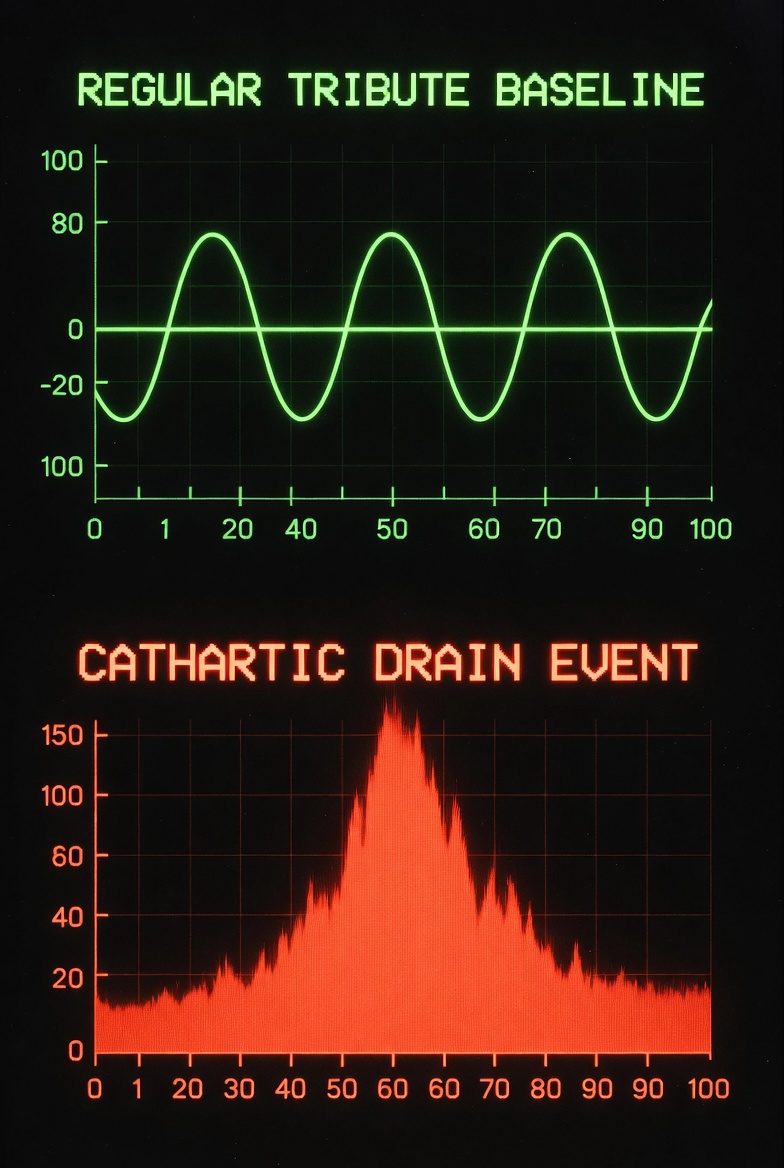
They simulate financial vulnerability. In your regular life, you manage your money carefully. You budget. You save. You make rational decisions about spending. A drain session disrupts all of that. For the duration of the session, you’re not in control of your finances—your dominant is. You send what you’re told to send, when you’re told to send it, and the amounts escalate in ways you wouldn’t choose on your own. That loss of control is the point. It’s what makes it feel real.
- They create intensity through excess. Regular tributes are sustainable precisely because they’re moderate. Drain sessions are compelling precisely because they’re not. The amounts are larger than you’d normally send. The frequency is faster than you’d normally go. You’re pushed past what feels comfortable into territory that feels genuinely risky. That risk—financial, emotional, psychological—is where the intensity comes from.
- They offer emotional release. Many financial submissives describe drain sessions in terms that sound almost therapeutic. There’s a catharsis in giving everything, or in giving until it hurts. It’s not masochism in the traditional sense—it’s more like the relief of finally letting go of control you’ve been holding too tightly.
- They mark moments. Because drain sessions are occasional rather than constant, they become events. You remember them. The session where you sent more than you’d ever sent before. The session that left you genuinely shaken. The session where something shifted in how you understood your own capacity for submission.
Regular tributes blend together over time. Drain sessions stand out.
The Neurochemistry of Draining
It’s worth talking about what’s happening in your brain during a drain session, because the experience is intensely neurochemical.
When you’re in a drain session—particularly one that’s paired with sexual arousal or edging—you’re flooding your system with dopamine. Each tribute triggers a reward response. Your dominant acknowledges it, demands more, and you send more. The cycle continues. Dopamine spikes, sustains, spikes again.
This is the same neurochemical pattern you see in gambling. The intermittent rewards (acknowledgment, praise, continued attention from your dom) keep you in the loop. You’re chasing the next hit of satisfaction, and the only way to get it is to send again.
But there’s more happening than just dopamine.
As the session progresses and the amounts escalate, you’re also triggering a stress response. Your body recognizes that you’re doing something risky—spending money rapidly, watching your available balance drop, transgressing the careful boundaries you normally maintain. Cortisol and adrenaline enter the picture.
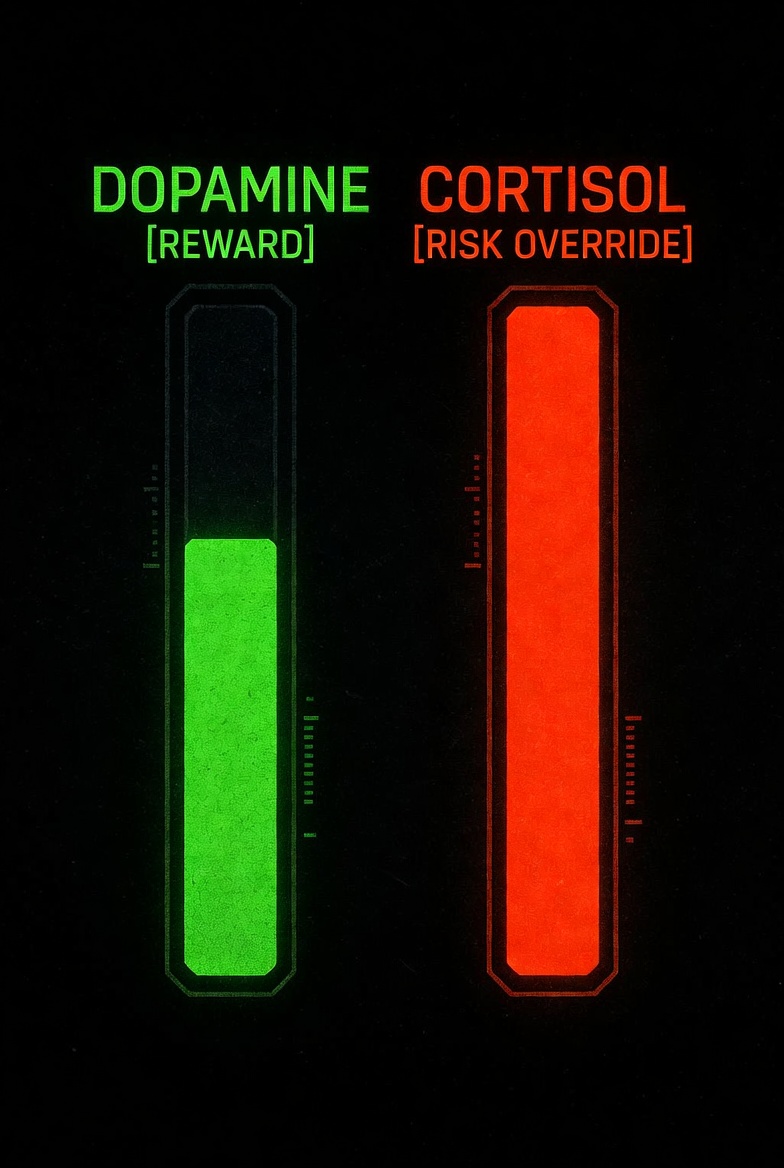
That combination—dopamine-driven reward plus adrenaline-driven risk—creates a state of heightened arousal that feels electric. You’re not calm. You’re not making measured decisions. You’re in a flow state where the normal barriers between thought and action have dissolved.
And then, eventually, the session ends.
Either you hit a predetermined limit, or you genuinely run out of available funds, or your dominant decides you’re done. The intensity drops. The neurochemical cocktail starts to clear.
What’s left is often a complex mix of satisfaction, exhaustion, and sometimes a crash. The same post-arousal clarity that happens after edging, but amplified because the stakes were financial rather than just sexual.
Risk and Reward
Here’s where we need to be honest about risk.
Regular tributes, because they’re budgeted and sustainable, carry relatively low risk. Yes, you’re giving away money you could spend on other things. But you’re doing it in a controlled way that doesn’t jeopardize your financial stability.
Drain sessions, by design, push closer to genuine risk.
The best drain sessions are structured with limits—hard caps on how much can be sent, separate accounts designated for play, clear boundaries established before the session starts. In these cases, the feeling of risk is real, but the actual risk is managed. You’re playing at financial vulnerability without creating genuine financial harm.
But not all drain sessions are structured this way.
In more extreme dynamics—or in situations where the submissive lacks the self-knowledge or self-control to set boundaries—drain sessions can cross from managed risk into actual financial damage. Sending money you can’t afford to lose. Depleting emergency funds. Going into debt.
This is where the psychological appeal of drain sessions becomes dangerous. The whole point is that they feel overwhelming, that they push past comfort. But “past comfort” and “into genuine harm” can be a blurry line, especially when you’re in a neurochemically altered state.
The question every financial submissive needs to answer for themselves is: where’s my line? What’s the difference between a drain session that satisfies my need for intensity and one that crosses into self-harm?
Why Some Subs Prefer Regular Tributes
Not every financial submissive is drawn to drain sessions. Some prefer the steady rhythm of regular tributes exclusively, and there are good reasons for that preference.
- Sustainability. If your goal is to maintain a financial submission dynamic long-term—months, years, indefinitely—regular tributes are more viable than frequent drains. You can sustain a weekly $50 or $100 tribute indefinitely. You can’t sustain a monthly $1000+ drain without eventually running into financial consequences.
- Integration over intensity. Some submissives care less about peak experiences and more about making financial submission part of the texture of their daily life. They want their dominant present in an ongoing, embedded way rather than in occasional bursts. Regular tributes accomplish that better than drains.
- Lower emotional volatility. Drain sessions, by nature, create emotional highs and crashes. Some people don’t want that volatility. They want a dynamic that feels steady, reliable, low-drama.
- Less risk of regret. Because regular tributes are budgeted and moderate, they’re less likely to trigger the post-session “what have I done” response that sometimes follows drain sessions.
Why Some Subs Prefer Drain Sessions
Conversely, some financial submissives are drawn specifically to drain sessions and find regular tributes less compelling.
- They want intensity. For these subs, the appeal of financial domination is precisely in the overwhelm. Regular tributes feel too controlled, too safe. They want to feel genuinely pushed, genuinely vulnerable.
- They’re wired for catharsis. Some people need periodic emotional or psychological release. They hold control tightly in their regular lives and need a structured way to let it go. For them, a drain session functions like a pressure valve.
- They’re drawn to the event quality. The fact that drain sessions are occasional makes them feel significant. They’re not routine; they’re occasions.
- They can afford it. If you’re someone with significant disposable income, the amounts that would constitute a “drain” for someone else might be easily sustainable for you.
The Hybrid Approach
Many financial submissives don’t choose exclusively between regular tributes and drain sessions. They incorporate both.
The structure often looks like this: regular tributes provide the baseline. Weekly or monthly payments that maintain the dynamic consistently and sustainably. These keep the dominant present, build discipline, and create financial continuity.
Then, occasionally—maybe monthly, maybe quarterly, maybe just when the submissive feels the need or the dominant decides it’s time—there’s a drain session. An event. A departure from the baseline that provides intensity, catharsis, and a reminder of what the submissive is capable of giving.
This hybrid approach lets you have both sustainability and intensity. The regular tributes keep you grounded; the drain sessions keep you pushed.
Knowing What You Need
Ultimately, the question of regular tributes versus drain sessions comes down to self-knowledge.
What do you actually need from financial submission?
If you need ongoing presence, discipline, and integration—regular tributes are your answer. If you need intensity, catharsis, and the experience of being genuinely pushed—drain sessions are your answer. If you need both—and most people do—then you build a practice that incorporates both in a sustainable way.
The mistake is assuming that all financial submission should look the same, or that what works for someone else will work for you.
Understanding the psychological difference between regular tributes and drain sessions lets you make conscious choices about how you structure your financial submission. It lets you choose the experience you’re actually seeking rather than just responding to whatever your dominant demands or whatever feels most intense in the moment.
And that consciousness—that self-awareness—is what makes financial submission a practice rather than just an impulse.